Top Navigation Bar

Quote About Dandelions

"You fight dandelions all weekend, and late Monday afternoon there they are, pert as all get out, in full and gorgeous bloom, pretty as can be, thriving as only dandelions can in the face of adversity."

-- Hal Borland

Showing posts with label education. Show all posts

Monday, January 16, 2017

At-Risk & Agriculture: Reaching and Retaining Urban and At-Risk Youth

(This was originally presented in January 2017 at the American Farm Bureau Federation Annual Convention and IDEAg Trade Show in Phoenix, AZ.)

As part of the requirements for an honors group I am in, I have been conducting a two-year research study on the benefits that urban, at-risk middle school students could receive from a basic introductory course in Agriculture. I chose this project topic due to experiences I had while a volunteer zookeeper at a local Zoo in the “Petting Farm” area – members of the public – both affluent and poor - were always astonished when they found out what a chicken or a cow looked like in real life.

People would come running up to me screaming, “What is THAT?!” And I would have the opportunity to explain to them that, "THAT" was a cow.

An Angus-cross
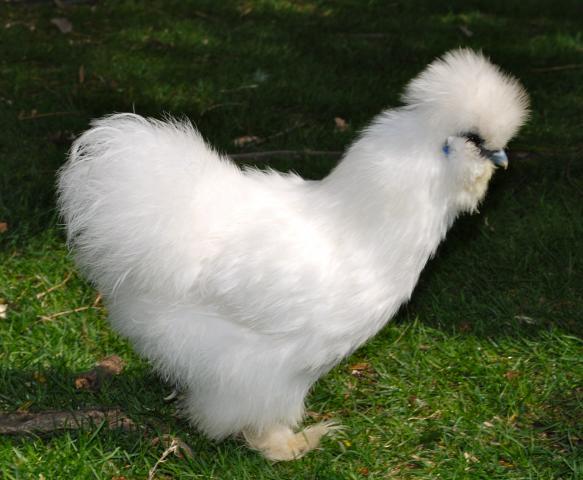
Or other times, someone would ask me, “Is that where my KFC comes from?” and I would get to explain that while their KFC didn’t come from bantam silkie chickens, they were on the right track.

http://www.backyardchickens.com/t/510635/silkie-bantam-hen-or-roo
A bantam silkie chicken

A Sanderson Farms truck hauling meat chickens heads down the highway, bringing fresh meat to you!

I realized at that time what an impact an education in Agriculture could have on my community and I decided I would do my part to make that education available to community members.

Defining Terms

Before I go any further, I am going to define At-Risk and Urban, because these terms can be ambiguous or have different meanings, depending on their context.

  • “At-Risk” is defined as a student who is likely to fail at school; usually by dropping out. (National Center for Urban Education Statistics)
  • “Urban” is typically large cities or areas with characteristics such as an increasing population of English language Learners or relatively high poverty rates. Urban can be further broken down into three categories: 
    • Urban intensive: Cities >1 million people 
    • Urban Emergent: Cities <1 million people, but are still very large
    • Urban Characteristic: Cities that are medium-large and share characteristics of the other two (Milner, “But What Is Urban Education”)


Why It Matters to You

Clearly this project matters to me, as I have spent two years of my life working on it, but why should it matter to you? The number one most important reason is that a wave of uninformed members of the public are dictating what happens at the production level of Agriculture. In short, your jobs are being run by consumers who don’t know anything about what you do. Who think that steak comes wrapped in cellophane and who have never seen a field, much less a worm, in their life. Yet we cannot look down on these people because they aren’t stupid – not at all – they are simply the product of an educational system that has chosen to focus on other things and has left Agriculture behind.


A Cheviot eweling that will be shown later in her life

Why It Matters to Them

Agriculture education matters to me, and it matter to you, but why should it matter to at-risk students living in inner cities? Because an education in Agriculture provides students with new opportunities for careers that they don’t even know exist.

It gives them the opportunity to learn skills that they could live off of or use as a hobby. A class in veterinary science that includes even small animals like a guinea pig gives students who are bullies and jerks the chance to learn empathy, compassion, and patience – skills that cannot be taught in almost any other setting.

It gives them the knowledge to make better consumer decisions in the grocery store and knowledge on how to respond when they see an inflammatory article online about the dangers of GMOs and antibiotics in their food.

And it gives them the chance to change the way that society at large views agriculture.
High school is setting the stage for students’ careers and collegiate decisions, and middle school sets the stage for high school. Currently, many of our nations’ students are entering high school with little-to-no background information on agriculture. We cannot expect those students to take Agriscience classes – should they even be offered – if they don’t even understand what agriculture is.

What Educators Said

In my research, I conducted a survey of middle school teachers in large cities throughout Tennessee and North Mississippi. The responses I got were very supportive of seeing Agriculture incorporated into their programs. Some of the responses I got were:

·         “It would give them structure and would be better for students that are active during the school year with extracurricular activities.”
·         “It would allow them to gain survival skills as well as learn how to lead a healthy lifestyle.”
·         “If disadvantaged students studied agriculture and linked it to other disciplines, they have the potential to learn not only healthier eating habits, but also how it fits into the greater economy. They could learn skills from raising livestock and crops to preparation, marketing and more - just within the food industry. And by tying it into technology, math, and engineering, they may find inroads to fields that they otherwise might not consider.”

Reaching Students

To reach our urban students, we have to be able to show them that the knowledge they gain from Agriculture classes will benefit their future and their present lives. We have to start recruiting in middle schools if we expect our students to be interested in high school. And we absolutely must have a presence in their community.

Community support is one of the number one reasons that a student may succeed. The community support will influence family support, and this is critical. We have to convince urban families that we are worthy of their child’s interest – careers in Agriculture just aren’t viewed as highly as sports or music careers in a lot of urban communities.

A crop of soybeans, ready for harvest

Retaining Students

To retain these students, we must ensure that students who are low-achieving are receiving equally as much attention as high-achieving ones. Simply because a student does not excel academically doesn’t mean that they aren’t going to be brilliant in a hands-on career.

We must also push for culturally inclusive programs. The majority of inner city students don’t look like me, and many of them don’t speak my language as their primary one. We have to have a program that takes note of this and includes them. Far too often we see programs that say something along the lines of, “And the pilgrim settlers began to plow (Oh yeah, and the Native Americans showed them that if they planted fish with their corn it would grow better) but the pilgrims did all this work and were able to cultivate the land.” While that is totally true, and very important for our students to knwo, that course of learning has the tendency to make White People the focus of it, totally discrediting the thousands of years of agricultural production that was done by millions of people that weren’t white. Some of the most historically advanced irrigation systems have been unearthed as relics in the Andes mountains. Israel currently leads the world in many Agricultural technologies. We have to make sure that students of every race and background understand that their culture has had a hand in getting Agriculture where it is today, and that they can continue that legacy.

And again, we must create a community focus. The more involved that we as an agricultural community become in primary education, the more we have a chance to shape and influence it and thus change societal perceptions of Agriculture.

How to Get Involved

How can we accomplish these goals of reaching and retaining students?
We can volunteer with local organizations and clubs already in existence. Our physical presence can be life changing for these students. If you don’t know what currently exists in your community, contact your Extension Agents and see if Master Gardeners, 4-H, or FFA is partnering with inner-city schools in any way. If you are a 4-H or FFA leader, consider having your members practice their speeches and reasons at middle schools.

A Collegiate 4-H student giving back to her local 4-H club
We can also talk to our local schools to find out what programs are already being offered to students by the school and then become active with those programs.
Time is a precious commodity, so if you are pressed for it, consider donating materials to school programs. If the school has a garden, perhaps you can donate top soil, or seeds, or a few shovels or rakes. These donations can be tax deductible, depending on which organization you give to.

Kids love field trips, and seeing a farm in working action can be highly influential to them. You may be able to have students out while planting or harvesting and let them simply stand on the side of your field and watch – I’ve had the opportunity to do this in my college classes, and if a 21 year old city-slicker can get excited from watching a combine drive past, image how excited a 12 or 13 year old would be.

Now, if bringing people to your farm makes you uncomfortable, is a biohazard, or just doesn’t work, consider taking the field trip to the students. I can’t tell you how excited a class of kids would be if you pulled up to their school with a cow in a trailer. Or if a biology class is talking about plant systems, bring in a few corn plants, or soybean, or cotton, or wheat. Whatever you’ve got is something that they don’t, and they want to learn about it.

A Case combine harvesting a test plot of corn

A Call to Action

This was only a few ideas to get you started, but there are many more out there. I encourage each of you create your own list for getting involved in a school’s community.

I want to encourage you – we are living in a time period when Agriculture is needed more than ever, yet is overlooked, unappreciated, and insulted on a daily basis. We cannot change people’s mindsets by being angry. Instead, we can provide the knowledge that is lacking and do it with kindness. We have the chance to mold society through our Nation’s youth, and I strongly encourage you to get out there and do so for the sake of Agriculture.

"You know, farming looks mighty easy when your plow is a pencil, and you're a thousand miles from the corn field." - Dwight Eisenhower Address at Bradley University, Peoria, Illinois, 9/25/56

Monday, November 17, 2014

Home Education - A Social Schooling

(This is the extended edition of a persuasive speech given in my Honors Communications class. Links to sources available upon request.)

Volunteer Zookeeper, ballerina, amateur herpetologist, beekeeper, costume maker, and orphaned squirrel rehabilitator. These are all titles I have held at some point in my grade school career. Titles that would not have been possible if my parents had not made the decision to homeschool me and my sisters. 


Although I knew it existed, until I got to college, I had never personally encountered the argument that homeschoolers do not achieve proper social skills because of their style of education. For the majority of my life I had only come across those who had recognized the vast benefits of homeschooling. It was intriguing to me to see that the pervasive myth of homeschoolers receiving improper socialization was present even among my peers. 

After examining this issue from various viewpoints, I have come to the following conclusions; when used properly, homeschooling provides proper social skills, diverse relationships, and extensive social interactions. Today, I hope to persuade you likewise.


When used properly, homeschooling provides proper social skills because the definition of social skills is misunderstood by mainstream society and because when used properly, homeschooling teaches all necessary social skills.

Instead of immediately questioning if homeschoolers have necessary social skills, question if you understand what necessary social skills are. According to dictionary.com, the definition of social skills is; “The personal skills needed for successful social communication and interaction.”


In a study conducted by Vanderbilt University, “[Stephen] Elliott [and] Frank Gresham identified the top 10 skills that students need to succeed based on surveys of over 8,000 teachers and over 20 years of research in classrooms across the country”. The skills are:
1. Listen to others
2. Follow the steps
3. Follow the rules
4. Ignore distractions
5. Ask for help
6. Take turns when you talk
7. Get along with others
8. Stay calm with others
9. Be responsible for your behavior
10. Do nice things for others


Parents are indeed concerned with socialization. In a survey of 31 homeschooling parents and students roughly half said that socialization was of either high or very high importance to them. The results did not vary much when student and parent results were separated.


Students have the opportunity to work directly with their parent who can more easily monitor their behavior and help shape it in their early formative years. As the students grow older, these skills are broadened by their interactions with other people. Because students have the ability to work one-on-one with parents, skills can be sharpened and weaknesses are able to be strengthened.

Now that we have a clear understanding of what proper social skills are, we can take a look at the social relationships homeschooling can offer students.

When used properly, homeschooling provides diverse social relationships because homeschoolers grow up in diverse families and because homeschoolers are exposed to a variety of demographics
 
I have met homeschooled students from different religions, ethnicities, and socio-economic backgrounds. Families with members who have different gender identifications, different races within the family, and families with members who had various learning challenges or health issues. In the same way that public or privately schooled students come from unique backgrounds, homeschoolers are not all cut from the same cloth.


According to the National Center for Education Statistics’ 2011-2012 report on education in the United States, 32% of home-educated students were in a minority group and 20% of all home-educating families were considered poor.


93% of my in-class survey participants said that they were friends with students from different schooling backgrounds than theirs. Interestingly enough, 94% of the homeschoolers who responded said that they are friends with public or private schooled students as well.


In a survey, one homeschooling parent listed questions they kept in mind when thinking of necessary social skills,
 “Can my child converse with those he or she comes in contact with in a clear and understandable way? Are they able to speak with the appropriate vocabulary depending on the age of the person they are speaking with? Are they able to make and maintain eye contact with those they are speaking? Are they able to engage in meaningful conversation with all ages and demographics they come in contact with?”
This parent is not only concerned with making sure their student is exposed to a variety of demographics, they have considered the skills their student will need to master such interactions.


Another parent’s response was, “My children participate in swimming for 3 hours a day with other children their own age who are homeschooled and public school children. They also participate in Band and Choir with same age children. When in high school they take dual enrollment college courses. They also volunteer in church with people of all ages. So they socialize with people of different ages in a variety of activities.”

Social skills are seldom selected as a point of strife for students in public school systems. Yet while a public or privately schooled students spends approximately 6 hours a day inside of a school, homeschoolers are able to participate in activities outside of their home at any time they choose.


Personally, I have done my schoolwork everywhere from doctors’ offices to car inspection lines. Because I could take my schoolwork with me, I was able to meet more people and see more situations than I might have elsewise. Homeschool support groups I have participated in would go to nursing homes or assisted living homes to sing Christmas carols or hand out Valentine’s Day cards. Because of my involvement with 4H, I was selected as a teen leader for a day camp where I helped master gardeners teach urban children all about where their food comes from.

We have discovered the diverse social relationships a homeschooler may encounter, it is now time to examine their social interactions.

When used properly, homeschooling provides extensive social interactions because homeschoolers have regular scholastic social interactions and because homeschoolers participate in extra-curricular activities.


 In his article “Revisiting Common Myths about Homeschoolers”, Michael Romanowski stated that “On the average, homeschooled students are involved in 5.2 activities outside the home, with 98 percent engaged in two or more.”

Out of the 8 homeschoolers whose classwork was confined to their home only, 7 of them still participated in activities outside the home on a weekly basis. These included Civil Air Patrol, band, sports teams, and classes with other students.

As you can see from the photos, homeschoolers are able to participate in a multitude of extracurricular activities. Everything from working with animals to being in a circus, running a 5K to being a beekeeper, and even going to prom or senior banquets.

According to my survey of homeschoolers, extracurricular activities they participate in include: 4H, dance, volunteer work, field trips, parties, scouts, Taekwondo, gymnastics, music lessons, and hanging out with friends.


Homeschoolers have even tackled the internet. Let’s watch a clip from the highly successful YouTube channel “Blimey Cow” as Jordan busts a few homeschooling myths.


In review, I have shown you why, when used properly, homeschooling provides proper social skills, diverse relationships, and extensive social interactions. Now, this is not to say that every single homeschooled student will display all ten skills at all times, and this is not to say that every homeschooled student will receive enough diverse socialization for them to not be individually labeled as socially awkward or unsure. However, as I hope I have shown you, these students are rare and should be considered outliers. The majority of homeschooling students are active members of their community. 

As one mother told me just recently, “Socialization? I am too busy driving my children from ballet to archery to 4-H to be able to focus on socialization.”

Wednesday, October 8, 2014

Adventures in Student Observing

There have been so many little adventures over the past few weeks that I've been observing at a local high school. I am required to write a journal-type report after each visit and I thought it would be fun to share my latest writings.

*All names have been changed in order to protect students' privacy
---
In order to accomplish the necessary planning for the lesson I am to teach in Vet Science, I am keeping track of where my CT is with her lessons and I have spent time with her going over the objectives. The lesson I will be teaching is on animal nutrition and reading feed labels. My CT employs several strong teaching techniques into all of her lessons and I will be sure to do the same. She has a portion where she introduces the new vocabulary and has students come up with definitions in their own words and then she teaches them mnemonics to help them remember the meanings. I plan on using some of her strategies and then combining them with some of my own. I am also consulting another agriculture teacher who is a recent graduate and using his ideas to inspire my lesson.
I enjoy the time before classes start and in-between classes because the teachers take time to talk with me about what works and what doesn’t in their classes, and how they deal with different situations in the school system. The CTs offer opinions on everything you could think of and I am enjoying being in their company. On the other hand, I have noticed that they enjoy the classes they teach because there is not too much pressure on them to have fantastic test scores on standardized tests, and because of this they don’t teach material as well as they might otherwise. This influences a n increasing concern I have - that I will fall into the mindset that agriculture classes don’t really matter and I’ll become too lax in my approach to teaching. The best way I can see to avoid this is to stay current in both global agricultural news and educational news. I will need to constantly remind myself and my students the real-world impact of what they are learning.  
I’ve discovered over the past five visits how careful I need to be with the words I speak to teachers and students. If I am too approachable for the students, I lose authority and have to backtrack to regain it. If I am not careful, my willingness to participate in instructing the class can be misinterpreted as overstepping my bounds and I have to work to regain the teacher’s acceptance of my help.
I have been on the lookout, so to speak, for the effects of the “No Bully” program. Today I witnessed a scene in my third-block class that both warmed my heart and made me angry. The turf class is composed of junior and senior guys who are fairly well behaved. There is one boy (I’ll call him, “Ian”) who is usually in special-education classes due to mental development issues, but because he helps his father with his landscaping business he requested to take the turf class. Today another classmate - “George” - swiped Ian’s hat in-between classes and hid it from him in the classroom – I didn’t realize what was going on until later or I would have stepped in at this point. Ian came into the class red-faced and upset because he couldn't find his hat. George sat and watched Ian get more and more upset, until yet another classmate - “Phillip” - noticed what was going on and demanded that George return Ian’s hat to him post haste and dared him to even think about picking on Ian again. The hat was returned, albeit some eye-rolling, and no more was mentioned of the matter by the boys. I was more than a little upset that someone would pick on a special-needs student – or any student for that matter – but I was excited to see that there were students willing to stop the bullying head-on. Now, as to whether or not that student stepped up because of the program, I am not sure. I will ask around next week to get the teacher’s input.    

            Something else that has been very encouraging to me is the principal’s encouragement for me to continue coming even after I am finished with my ten visits. Ms. C would like for me to stay involved with the agriculture program at her school. I talked with the teachers and we’ve agreed that I will start attending their FFA meetings so that I can both learn about how that club works and stay involved in the school.